
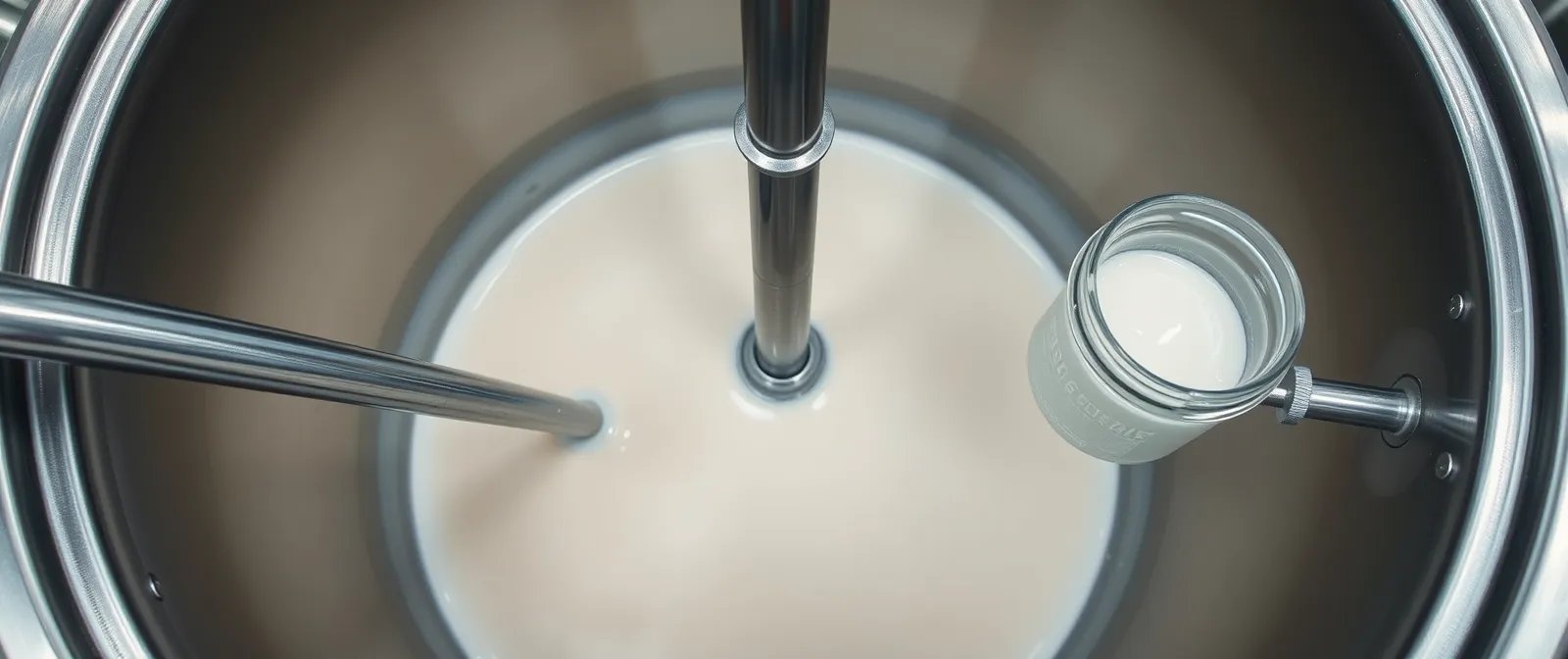
A defoamer breaks down foam that has already formed, while an antifoam is added to prevent foam from forming; in practice the terms are often used interchangeably, and many products do both. Silicone foam control agents work at very low doses and in harsh conditions, while non-silicone options, based on mineral oil, vegetable oil, polymers or fatty chemistry, are chosen when silicone could cause surface defects, recoat problems or regulatory concerns.
Foam slows production, causes overflows, affects fill weights and creates defects in coatings and films. The right foam control agent solves the problem at a low dose without creating a new one.
Why does foam form in industrial processes?
Foam forms when gas is trapped in a liquid that contains surface-active materials such as surfactants, proteins or polymers. Mixing, pumping, aeration, boiling and agitation all introduce air. Water treatment, food processing, fermentation, pulp and paper, cleaners, coatings, metalworking fluids and wastewater are common foam trouble spots.
How do silicone antifoams work?
Silicone foam control agents are usually based on polydimethylsiloxane, often combined with hydrophobic silica, and supplied as compounds, fluids or emulsions. They spread rapidly across foam bubbles and rupture them. They work at low dose, over a wide temperature and pH range, and are persistent. See our silicone antifoams, silicone emulsions and silicone fluids.
Food-grade silicone antifoams are available for some food and fermentation uses. Check the regulatory status for your application.
When should I choose a non-silicone defoamer?
Non-silicone defoamers are often preferred when:
- A coating, ink or adhesive could develop craters or fisheyes, or have poor recoat adhesion, from silicone.
- A downstream process, such as painting or plating, is sensitive to silicone contamination.
- A customer specification excludes silicone.
- A biodegradable or bio-based option is wanted.
Common types include mineral oil and vegetable oil defoamers, EO/PO block copolymers, fatty alcohol and fatty acid ester products, and polyether-based systems. Our catalog also lists other antifoam products for water and process systems.
How do I test foam control?
- Reproduce the foam: shake, sparge air or recirculate a sample of your actual process liquid.
- Add each candidate at a few dose levels.
- Measure knockdown (how quickly foam collapses) and persistence (how long control lasts).
- Check side effects: clarity, film appearance, filterability or product stability.
- Confirm the best candidate in the plant at the lowest effective dose.
Overdosing is a common mistake. More defoamer is not always better and can cause defects or deposits.
Where should a defoamer be added?
Add the defoamer where foam starts, for example at the suction of a pump, the point of aeration or the mixing tank, rather than waiting until foam fills a vessel. Emulsions usually disperse faster in water systems; compounds and oils may need dilution or good mixing.
Which industries use foam control agents?
Water treatment, food ingredients, agriculture, coatings, adhesives and sealants, home care and industrial cleaning, lubricants and metalworking and chemical manufacturing.
How can I buy antifoams and defoamers?
NTC supplies silicone and non-silicone foam control agents in pails, drums and totes from distribution locations around the country and direct from chemical manufacturers. Tell us the process, temperature, pH and any restrictions on silicone, and we will suggest options to test.
Frequently asked questions
Is there a difference between antifoam and defoamer?
Technically, antifoams prevent foam and defoamers destroy existing foam, but many products do both and the names are used interchangeably.
Why does silicone cause defects in coatings?
Silicone lowers surface tension locally, which can cause the coating to pull away and form craters or fisheyes, and can interfere with adhesion of later coats.
How much defoamer should I use?
Doses are typically low, but they depend on the system. Start low, test, and increase only if needed.
Can a defoamer be included in a blend?
Yes. We can include foam control in a custom blend where the components are compatible.
Request a quote
Tell us the product, grade, quantity, packaging and delivery location through the quote form, email sales@nanotechnologychemicals.com or call 704-659-3682. All pricing is by quote.
NTC is based in the Charlotte, NC area and ships nationwide. Products ship from distribution locations around the country and also direct from chemical manufacturers. Browse the product categories or the industries we serve.