
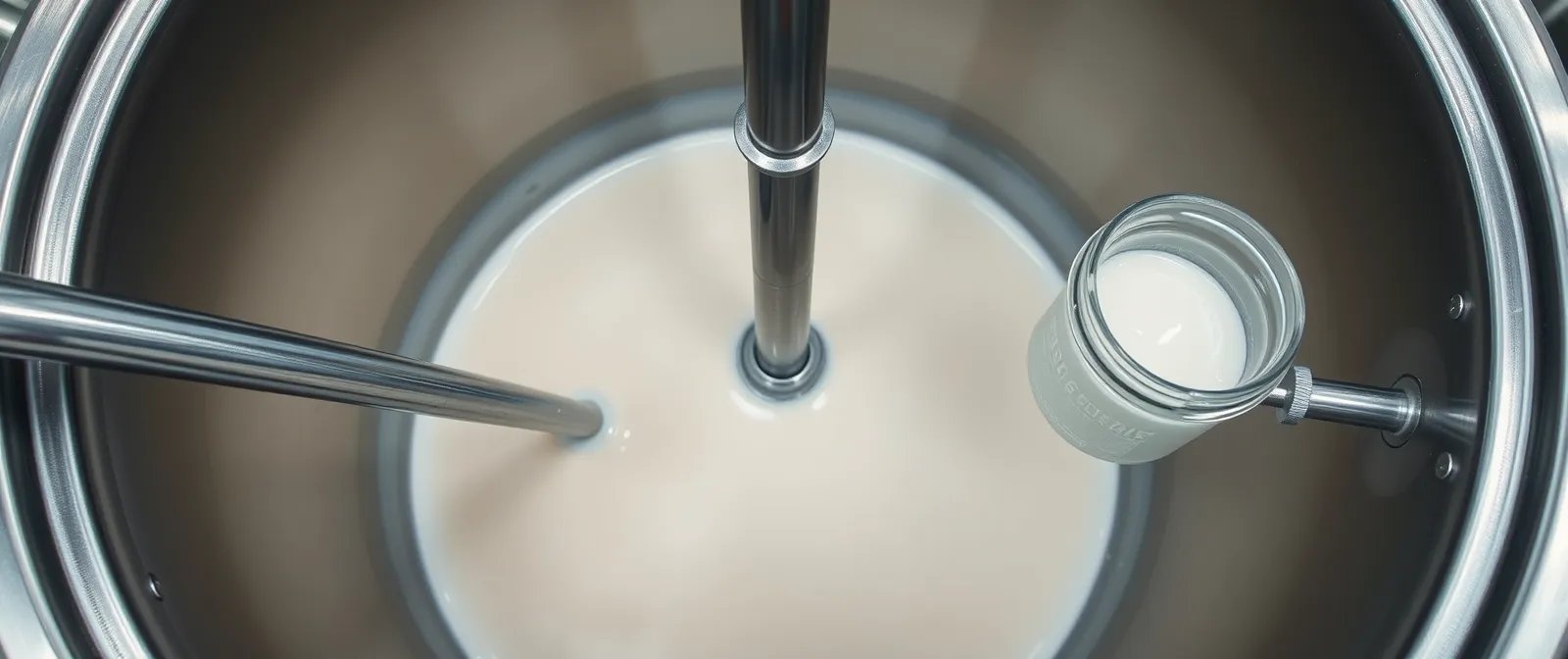
Surfactants are grouped by the electrical charge on their water-loving head: anionic surfactants carry a negative charge and are strong cleaners and foamers, nonionic surfactants carry no charge and are versatile emulsifiers and degreasers, cationic surfactants carry a positive charge and are used for conditioning and disinfection, and amphoteric surfactants change charge with pH and are mild foam boosters. Most commercial formulas combine two or more types.
Knowing the classes makes it easier to pick a starting point, avoid incompatible combinations and understand why a formula foams, rinses or cleans the way it does.
What are anionic surfactants used for?
Anionic surfactants are the most widely used class. They lift and suspend soils and produce rich foam, which is why they dominate laundry detergents, dishwashing liquids, shampoos and many industrial cleaners. Common examples include alkyl sulfates and ether sulfates, sulfosuccinates, sarcosinates, taurates and phosphate esters. Anionics can lose performance in very hard water, which is one reason formulators add chelating agents.
What are nonionic surfactants used for?
Nonionic surfactants have no charge, so they tolerate hard water and mix with most other surfactant types. They are excellent at removing oily soils and forming emulsions, and they often foam less, which suits machine and spray cleaning. Examples include alcohol ethoxylates and specialty ethoxylates, alkyl polyglucosides (APGs), sorbitan derivatives, alkanolamides and alkoxylates. Many nonionics have a cloud point, a temperature above which they become less soluble, which matters in hot cleaning processes.
What are cationic surfactants used for?
Cationic surfactants carry a positive charge and are attracted to negatively charged surfaces such as hair, fabric and many solids. That makes them useful as conditioners and fabric softeners, while quaternary ammonium compounds are widely used as disinfectants and sanitizers. Examples include amide and ester quats, amine ethoxylates and quaternary ammonium compounds. Cationics generally do not combine well with anionics in the same formula because the opposite charges can neutralize each other.
What are amphoteric surfactants used for?
Amphoteric (zwitterionic) surfactants carry both positive and negative groups. They are mild on skin and eyes, boost and stabilize foam and help thicken formulas, so they are common in personal care and hand dishwashing. Examples include betaines, sultaines and amine oxides, which behave as nonionic or cationic depending on pH and are often grouped with this family in formulation work.
How do I choose surfactants for a formula?
- Define the soil and surface. Oily soils favor nonionics; particulate soils and foaming applications favor anionics.
- Check water hardness and pH. Hard water and extreme pH narrow the options.
- Decide how much foam you want. Manual cleaning often needs foam; machine and clean-in-place systems often need low foam.
- Check compatibility. Avoid mixing anionics and cationics unless the formula is designed for it.
- Consider mildness, biodegradability and labeling. These often decide between otherwise similar options.
Hydrotropes can help keep concentrated formulas clear and stable, and a glycol ether co-solvent can improve grease cutting; see our glycol ethers guide.
Which industries use surfactants?
Surfactants are used across home care and industrial cleaning, beauty and personal care, agriculture, coatings, adhesives and sealants, lubricants and metalworking, oilfield and textile processing.
How can I buy surfactants in bulk?
NTC lists more than 20 surfactant families in our surfactants category, supplied from distribution locations around the country and direct from chemical manufacturers. If you need a ready-to-use mix, we can also prepare a custom blend to your formulation.
Frequently asked questions
Which surfactant type foams the most?
Anionic surfactants generally produce the most foam, and amphoterics such as betaines boost and stabilize it. Many nonionics are low-foaming.
Can I mix anionic and cationic surfactants?
Usually not in the same product, because the opposite charges can form insoluble complexes and reduce performance. Some specialized formulas do it deliberately.
What is HLB?
Hydrophilic-lipophilic balance is a scale used mainly for nonionic surfactants that indicates whether a surfactant favors oil-in-water or water-in-oil emulsions. It helps narrow choices for emulsifiers.
Are there bio-based surfactants?
Yes. Alkyl polyglucosides and many surfactants derived from plant oils are bio-based. See our sustainable products category.
Request a quote
Tell us the product, grade, quantity, packaging and delivery location through the quote form, email sales@nanotechnologychemicals.com or call 704-659-3682. All pricing is by quote.
NTC is based in the Charlotte, NC area and ships nationwide. Products ship from distribution locations around the country and also direct from chemical manufacturers. Browse the product categories or the industries we serve.